
India to Africa Exports 2026: Top Products and How to Find Buyers
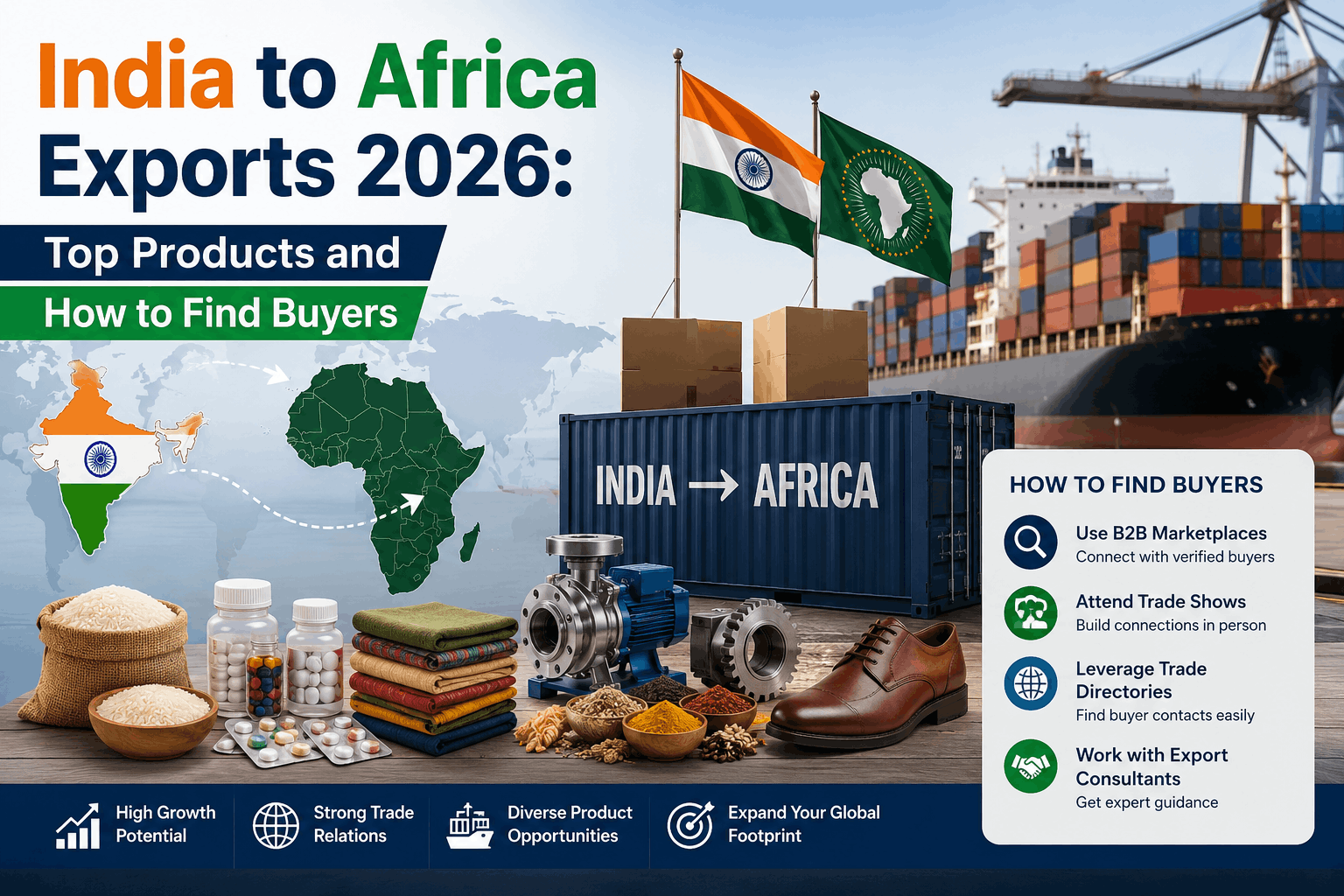
The trade volume between India and Africa has surpassed $103 billion in the fiscal year 2025. Twenty years ago, the figure was $4.45 billion. The number has increased to 200% and continues to increase at a rapid rate.
Africa is currently the third-largest trading partner for India around the globe. The Minister of External Affairs S. Jaishankar called it "the fourth largest trading partnership for Africa" in terms of the amount of trade between these two nations. For Indian exporters, the size is the result of one factor: Africa is not a niche market. It's one of the largest export markets of the current decade.
This article lists the most popular products African countries are likely to purchase from India in 2026. It also lists the countries that will have the highest imports, and what actions Indian exporters should take to determine and reach deals with African buyers.
Why Africa Is a Priority Export Market in 2026
Three factors make Africa present-day attractive for structurally. The increase in population is the main reason. The second reason is that Africa is growing by 30 million each year, which drives the demand for food, medicines and other consumer items, where Indian exporters can compete on price and size. Urbanization is the third factor. African cities are growing faster than any other area in the world and bringing in machinery, automobiles for construction equipment, as well as electrical products. The third reason is the position of tariffs. With US tariffs disrupting traditional Indian export markets, Africa offers an alternative route with lower friction and growing government-to-government trade support. India's credit lines that are extended to African nations are currently worth millions of dollars. which allows for the establishment of lasting relationships with business partners.
Top Products Indian Exporters Sell to Africa
1. Pharmaceuticals
This is the largest export to Africa economically and commercially. Indian generic medications make up the majority of all imports from Africa that provide treatments for malaria, HIV, and tuberculosis, among other medications that contribute to the burden of disease across the continent.
The market in 2026 has grown beyond the production of capsules and tablets. Indian exporters are now providing diagnostics, vaccines, active pharmaceutical ingredients, as well as medical devices. A lot of African health institutions across the country purchase exclusively from Indian manufacturers due to the fact that Indian generics have the lowest cost per treatment available anywhere in the world, without compromising WHO guidelines regarding pre-qualification.
for pharmaceutical firms that export their products, the most important African markets include South Africa, Kenya, Nigeria, Ghana, Tanzania and Egypt All of which have regulations regarding Indian products.
2. Refined Petroleum Products
Energy is the most important trade route that connects India and Africa in terms of value. India brings crude oil to Nigeria and Angola refines it. Then it ships diesel aviation fuel, LPG along with Lubricants to African countries that have only the capacity of a small refinery. In 2026, the expansion will focus on LPG distribution partnerships and energy logistics, and establishing relations with Indian refiners as well as African customers of oil and gas.
3. Engineering Goods and Machinery
Infrastructure is Africa's most important goal for economic development. Ports, ports factories, roads and power grids are using huge quantities of industrial machinery, construction equipment, as well as electrical equipment. Indian engineering products provide the advantages of competitive pricing and are suitable for dry and tropical conditions. Indian exports of machinery aid in technological advancement and the development of new capabilities which African officials are actively encouraging and promoting, which provides Indian suppliers an advantage when they submit their bids for procurement, compared to competitors who have no after-sales service.
4. Vehicles and Auto Components
The growing middle class in Africa is purchasing two-wheeler buses, passenger cars and commercial trucks. Indian automobiles that are dominated by Tata Motors, Mahindra, and Bajaj as well as a variety of mid-tier manufacturers, are renowned for their reliability and efficiency in fuel and maintenance costs that are minimal on rough roads.
Beyond the general auto industry, auto components employed in local assembly plant are a significant and growing segment. Some African countries have begun to encourage local assembly of automobiles. This has led to an increase in demand for Indian-made products in the entire supply chain.
5. Textiles and Garments
Indian synthetic clothing made from textiles and ready-made clothing can compete with Chinese alternatives West Africa (Nigeria, Ghana, Senegal, Benin) and East Africa (Kenya, Tanzania, Ethiopia). The India-EU FTA that was signed in January 2026 has shifted a significant portion of Indian capacity for textile production to Europe; however, Africa remains a large market.
6. Rice, Sugar, and Agri-Products
Security of food is a key issue in sub-Saharan African countries. Basmati rice, non-basmati rice sugar tea wheat flour, and spices are shipped in massive quantities. In 2026, the urban African consumers will move towards processed and packaged foods, which is a proof of Indian exporters' ability in producing products with high value. Fertilisers and irrigation equipment, as well as farming machinery and agricultural inputs are also increasing exports.
Which African Countries purchase the most from India
Understanding the market at a national level is crucial. Africa comprises 54 nations, each with its own economic and regulatory systems, as well as different export preferences.
South Africa imported $8.14 billion from India in 2024, making it the continent's largest buyer. The top categories are mineral fuels, automobile, pharmaceuticals, machines, and automobiles. Access is via established ports in Durban as well as Cape Town with strong logistics infrastructure.
Nigeria is the largest nation in Africa and is an important consumer of pharmaceuticals, petroleum products, and other goods for the consumer. The Lagos's Apapa port is the principal entry point, however, the port's congestion and fluctuations in the naira currency are real operational risks one should be aware of.
Egypt is the biggest North African market -- huge consumer base, with an industrial demand and a significant re-export to markets in North Africa. Middle East and North Africa.
Kenya is the main center for trade and commerce within East Africa. Mombasa port serves not only Kenya but also Uganda, Rwanda, South Sudan and a portion of the Democratic Republic of Congo. Indian pharmaceutical equipment and agricultural machinery and electrical equipment are among the most important aspects of port.
Tanzania is described as an important East African market for machinery, industrial tools, electrical equipment and other tools that aid in the building of infrastructure.
How to Find Verified African Buyers
The difficulty of finding African buyers is the principal reason Indian exporters are struggling and not because the demand isn't there, but because the market is fragmented, and finding buyers requires the right channels.
The following list is one of one of the largest marketplaces in the world that cater to the B2B market. African procurement managers are always searching for B2B platforms to locate Indian suppliers. A comprehensive description of a market such as Worldwide Exporter -- with specifics of the goods, MOQs and pricing levels as well as the particulars of certifications exposes your company to buyers making conscious choices regarding the best place they can source their products.
Connect via Export Promotion Councils. APEDA (agri-products), PHARMEXCIL (pharmaceuticals), EEPC India (engineering products) and TEXPROCIL (textiles) Each of them organizes meetings for sellers and buyers in Africa and trade fairs. Membership allows verified trade missions and databases of buyers supported by the government to major African markets.
Utilize EXIM Bank credit lines. India's EXIM Bank extends lines of credit to African governments and development banks to finance purchases of Indian products. If your items are in the category of government procurements for infrastructure equipment, machines, and pharmaceuticals, keeping an eye on the present EXIM Bank credit lines gives buyers an easy route to purchase from these banks.
Join trade organizations. The India Africa Trade Council (IATC) and the Conclave of the CII EXIM Bank on the Growth of India and Africa Partnership connect Indian exporters to African distributors and buyers via periodic events, as well as databases of buyers.
Final Thoughts
The commerce between India and Africa has grown between $4.45 billion in 2000, and was surpassed by $103 billion by 2025. Africa is becoming more urban, industrializing, and increasing faster than any other area. Indian exporters enjoy substantial advantages in each type of import.
The exporters that are growing are those that think of Africa as their primary market. They are placing ads on B2B platforms, developing Export Promotion Councils, and creating connections with distributors prior to when their competitors are able to do so. The opportunity won't come around anytime soon. It's already here.