
Top Importing Countries for Indian Spices in 2026 (Complete Guide)
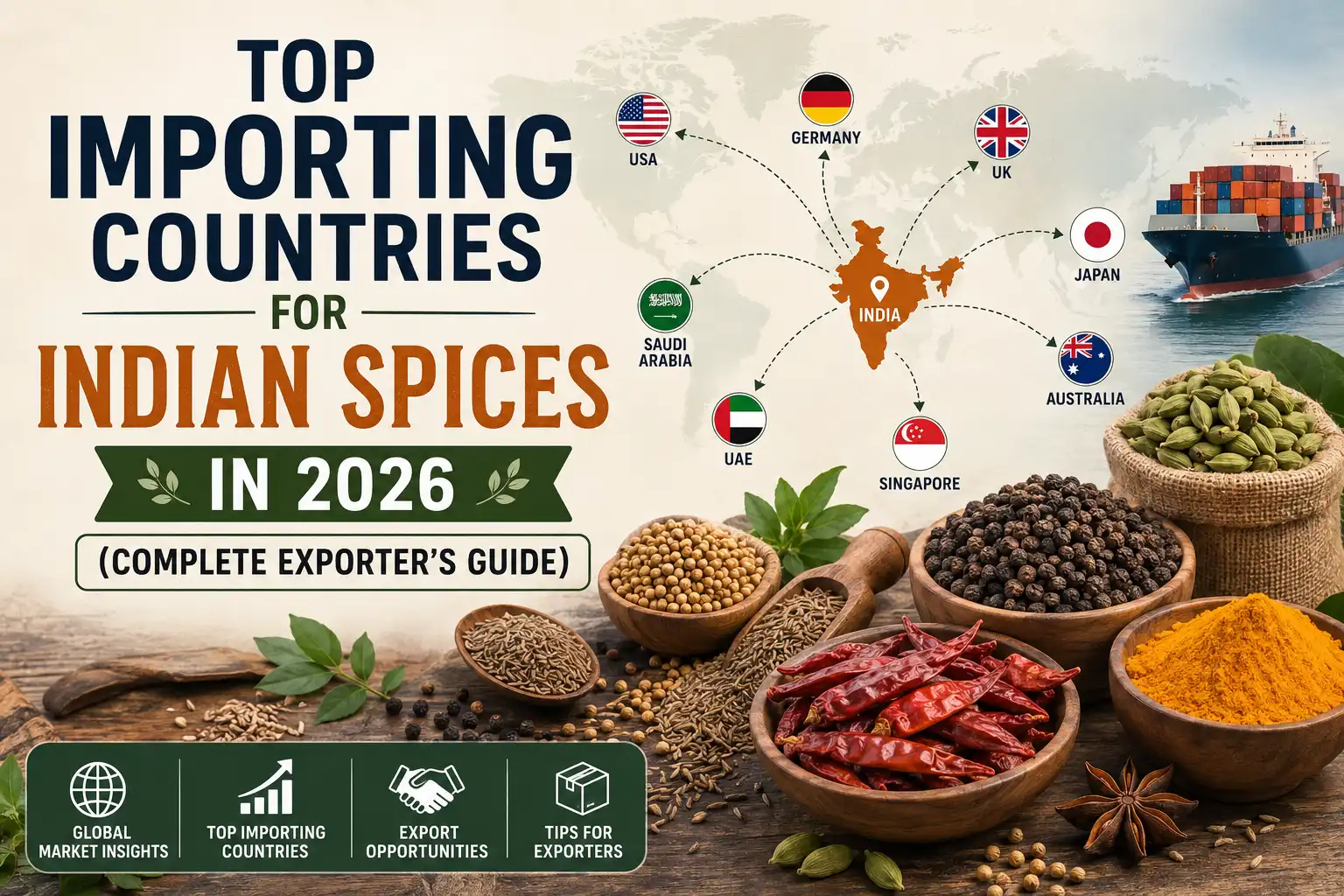
India is proud to have earned the reputation as the "Spice Bowl of the World" with good reason. With over 75 varieties of spice that are grown across states such as Kerala, Andhra Pradesh, Rajasthan, Gujarat, and Madhya Pradesh.
India now exports spices to over 180 countries and has the largest part of the world trade in spices both in quantity and value.
If you're an exporter supplier manager or a B2B buyer trying to determine the direction Indian spices will go in 2026 -and where the most lucrative opportunities are -- this guide will help you understand the top countries that import Indian spices in 2026 and the spices they are most likely to purchase and what's happening this year.
India's Spice Export Snapshot (2025-26)
Indian spice exports reached records during FY 2024-25 bringing to around $4.72 billion. The momentum continues into FY 2025-26 and has seen a brisk early-year growth.
Chilli, cumin coriander, cardamom, and cumin continue to be the core of the trade, with coriander and turmeric, which account for the majority of the value of exports.
Understanding the export of spices from India 2026 trends is the first step towards understanding the markets that are worth focusing on.
Some noteworthy shifts worth noting before we go over the most important importers of Indian spices:
Cardamom exports have increased because of a shortage of crop in Guatemala which is one of India's biggest global competitors, which has pushed more buyers from abroad to Indian "Small Green" cardamom.
Customers are prioritizing compliance over price. Maximum Residue Limit (MRL) testing Sortex cleaning, Spices Board CRES certification are now the norm not extra features for clearing customs between the US and EU.
Spice formats that add value are gaining. Oleoresins, spice oils and ready-to-use blends are growing faster than raw whole-spice shipment particularly for buyers of food manufacturing.
Top Countries Importing Indian Spices in 2026
1. United States
In the list of top countries that import Indian spices The US remains the largest market in terms of value. The demand is driven by the increasing interest in ethnic cuisines including home cooking, as well as health-conscious eating.
American food companies are moving towards concentrated spices and oleoresins, instead of whole spices, with a focus on consistent flavors across all large-scale food production.
Top-selling spice: Turmeric, cumin chilli and spice and oleoresins
2. China
China is now one of the most valuable sources for Indian spices, and is importing huge quantities for cooking directly and further processing.
Top-selling spice: Chilli, ginger and turmeric
3. United Arab Emirates (UAE)
Being one of the most significant exporters of Indian spices, Dubai functions as the most efficient hub for re-exports. The traders import whole spices in bulk, put them in top-of-the-line packaging, and then ship them to the markets of Africa as well as Europe.
The large South Asian population in the UAE is also a major driver of direct consumption.
Most popular spice blends: Cumin, chilli, cardamom, cumin, whole spice blends
4. Bangladesh
The closeness between the two countries and the shared food culture shared culinary traditions and geographic relationship create Bangladesh one of the top reliable high-frequency Indian export destinations for spices in South Asia.
The business here is comprised of whole spices, such as coriander, cumin and the fennel chillies and cumin that are used in traditional cooking as well as for retail packaging.
The most popular spice: Coriander, cumin, chilli, fennel
5. Vietnam
Vietnam imports large amounts of Indian chillies and turmeric, but they are mostly processed, and then sold under Vietnamese labels to other Southeast Asian and European buyers. The processing facilities in Vietnam are incredibly efficient, making it a reliable B2B provider of raw material suppliers.
Top-selling spice: Chilli, turmeric
6. United Kingdom
The UK remains a major tourist destination and is largely driven by its South Asian diaspora population. Import regulations post-Brexit have been become more stringent, with greater scrutiny on the limits for residues of pesticides and accuracy of labeling, as well as traceability documents.
Top-selling spices: Turmeric, cumin and mixed masalas
7. Saudi Arabia & the Middle East
A rising demands for authentic South Asian and Middle Eastern cuisine, in conjunction with a large population of expatriates ensures that this region is an ever-growing, stable buyer of Indian spice blends and whole spices.
Most-loved spice: Cardamom, cumin chilli, cumin
8. Malaysia, Thailand & Southeast Asia
The region is steadily increasing the import of spices for kitchens and the food processing industry with India providing a wide variety of turmeric, chillies, and other whole spices.
Most popular spice mixes for sale: Chilli, turmeric whole spice mixes
9. Germany & the Netherlands (EU)
The buyers of spices in Europe are among the most sophisticated all over the world, and have stringent traceability and requirements for pesticide residue.
Germany particularly is a major consumer of pure cumin to European spice blend manufacturers.
The most-seller spice: Cumin, turmeric and pepper
What This Means for Exporters in 2026
If you're planning to establish or expand your business with spices exported from India and you'd like to select the best spice importers overcoming stress are a few practical suggestions:
Do not try to conquer every market at the same time. The US and UAE provide the best value opportunities, however Bangladesh as well as Southeast Asia offer faster-moving, high-frequency repeat orders that are ideal for establishing a steady cash flow.
Compliance gives you an competitive advantage. Buyers in the US, EU, and UK are increasingly rejecting packages because of MRL and other labeling problems.
Making sure you have Spices Board CRES certification, phytosanitary certificates and laboratory-tested Certificates of Analysis in order prior to contacting buyers will help you stand out from your competitors who rush in the last minute to get their paperwork in order.
Look at value-added items. Oleoresins, spice oils and pre-blended masalas are expanding faster than whole-spice raw exports in mature markets such as the US and Germany.
Re-export hubs can be worth forming relations with. Vietnam and the UAE do not only consume Indian spices, they also process them and re-export them.
By partnering directly with processors from these hubs could give you access to markets that you're not yet able to service directly.
Ready to Connect With Verified Spice Buyers?
If you're exporting turmeric Germany or chilli to Vietnam, finding reputable buyers from the top countries that import Indian spice is the most significant bottleneck for many Indian spice exporters. On Worldwide Exporter, you can list your spice items and connect directly to international buyers and expand your exports business without having to rely on middlemen.